You’ve probably heard the phrase, “A good offense is a great defense.” It’s a favorite line of high school coaches trying to motivate their players to try harder on defense.
However, the saying and practice shouldn’t stop at the end of high school sports.
When small to medium-sized businesses (SMBs) think about cybersecurity, they usually picture strong defenses like firewalls, antivirus software, and impregnable encryption… but the truth is that no matter how strong or sophisticated your defenses are, the best defense comes from trained employees.
In reality, most cyber incidents start with a simple human mistake…
- Someone falls for a phishing email and gives away critical credentials.
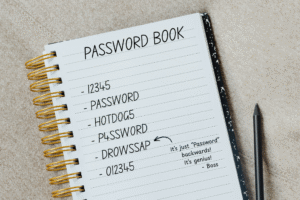
- The same exact weak passwords are used for multiple accounts across the business.
- An employee downloads malicious programs and attachments from the internet.
- Important credentials are entered into fake login pages.
That’s why employee training is one of the most important, yet overlooked, parts of any SMB’s cybersecurity strategy.
Why Are Employees the First Targets?
Cybercriminals often target individual employees first long before they begin targeting networks and infrastructure.
Often times, employees are easier to trick than automated defense systems. While systems are rigidly trained and optimized to keep criminals out, humans still can still have lapses in judgment that create costly mistakes. In fact, these mistakes can bypass multiple security tools and even give attackers access to the security tools.
Because most cyber incidents begin with human error, employees are a primary attack vector for criminals.
What Attacks Target Employees?
Nowadays, there are a lot of different attacks and cyber liabilities that target employees. While attack strategies from cybercriminals are always evolving and adapting, these attacks tend to fall in similar framework on which employees can be trained.
Email Phishing Attacks
If you or your employees have ever received a suspicious, time-urgent email asking for payment, login credentials, or link clicks, then you’ve probably received a phishing email. Any phishing email is designed to look urgent, familiar, or authoritative to trick employees to do what the email asks.
At a first glance, the emails look pretty accurate to what an employee might think an email from the reputable source would look like. An email from Microsoft has the logo and format of the company, a fake invoice from a supplier is identical to a real one, or emails from company executives asking for gift cards for clients appears to come from the correct person and/or email.
However, with training, employees are more apt to recognize telltale signs of phishing attempts. Easy ways to tell a phishing email is… well, a phishing email… is to note:
- Suspicious links that say “clickme” or are a random series of numbers and letters.
- Subtle spelling errors in the subject line, body of text, names, or signatures of emails
- Unexpected attachments that come in all sorts of forms and styles such as:
- PDF files
- Microsoft Office Documents (Word, Excel, PowerPoint)
- Executable Files (.exe, .bat, .js)
- Compressed Files (ZIP, RAR)
- Images or Audio Files
Phone Call Vishing Attacks
Similar to phishing attacks, vishing attacks focus on getting access to data, credentials, and finances through tricking employees with fake phone calls that seem legitimate.
Like phishing attempts, these calls may seem legitimate at first, especially if the attacker mentions employees, decision-makers, or key business contacts. Likewise, these vishing calls often seem authoritative and urgent, with the caller often pressuring employees to follow through with instructions for a variety of reasons, but the end goal is always the same: get your credentials, data, and/or money.
The goal of training employees for vishing attempts helps to develop critical procedures and workflows that prevent employees from falling for vishing attempts. For example, if a vishing scammer calls your office pretending to be a supplier and attempts to acquire payment for a fake bill or invoice, a procedure of requiring your employees to verify that request with a specific, verified contact person at the supplier before payment would counteract this attack.
Scams Are Constantly Evolving
While phishing and vishing attacks are at the top of the list, scammers and attackers are always evolving their attack strategies to find new and creative ways to access and steal sensitive business data and credentials. Creativity isn’t only used for good, and attacks can take new forms each day. For example, a recent attack in late 2025 had users downloading a fake Microsoft Teams installer that was found through a Google search for the app! Strong training, permissions, and procedures help prevent future attacks.
How To Train Your Employees
With all that could go wrong, it’s important to invest in proper cybersecurity training for your employees.
A common concern that we hear from business owners is that they believe that training will slow down employees because of length. Plus, who really pays attention to any corporate-style training?
In reality, good training is short, practical, and fits into the regular workflows of your employees’ days. Additionally, any good training should focus on real-world scenarios that are related to your business and industry. After all, employees don’t need to become cybersecurity experts. They just need to be trained on how to recognize the red flags and what to do next.
With good, short, practical training, employees are informed on not only those red flags, but procedures are placed to empower employees to spot and report issues early, ensuring that threats are contained faster, damage is minimized, and downtime is reduced. The faster the response, the lower the recovery costs will be in the event of a breach.
So, how do you train your employees then? First, it’s important to have a view of cybersecurity training as an ongoing process, not a one-time event. This is important because cybersecurity threats are always changing, so these short, practical trainings ranging from once a year to up to four times a year.
Need Help With Training?
Like how your employees don’t need to be highly-trained cybersecurity experts, neither should you! Instead of trying to build your own training or trying to keep up with every new trend, you can rely on a dedicated IT expert to set up, run, and continually train your staff.
Here at Marvel IT Services, we offer our ongoing clients cybersecurity trainings to help employees learn and stay informed on the latest cybersecurity trends to build a solid foundation for each client’s security plan. Beyond that, we use state-of-the-art cybersecurity tools, software, and hardware to protect each and every one of our clients.
If you’re looking for help upgrading your business’s first line of defense, that is, your employee’s knowledge and skills, reach out to us today for a free security checkup and consultation!